
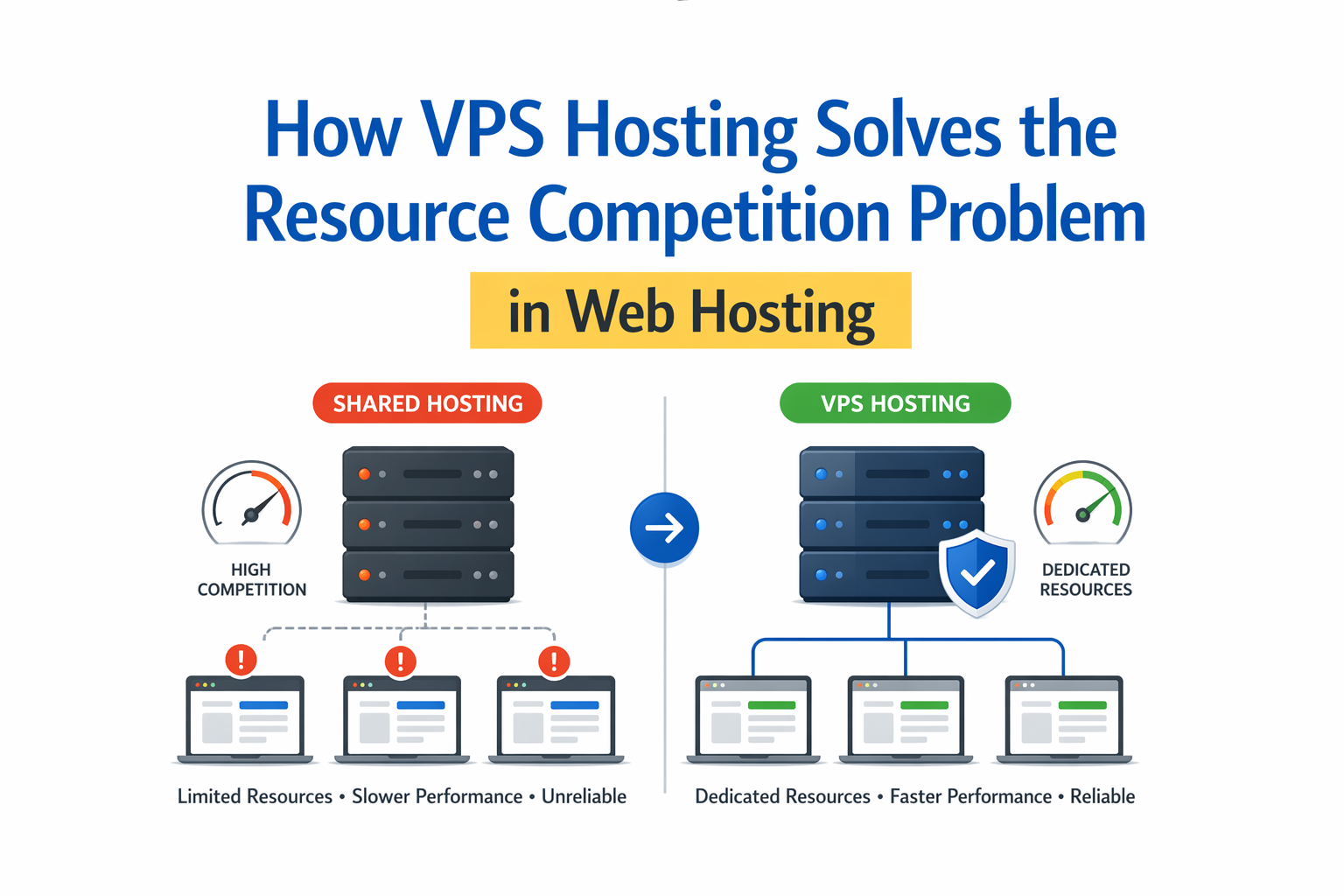
Many businesses searching for low-priced VPS hosting face performance difficulties managing resources. At first, shared Hosting is quite fine, but the challenge of resource competition comes into play soon after. According to Statista’s 2024 report, the global web hosting market is expected to increase to USD 192.85 billion in 2025-2026, as businesses shift towards a more stable hosting environment.
Businesses often start looking into better infrastructures when their website traffic grows or when they need more stable computing power to run their applications consistently. In these scenarios, low-cost VPS hosting with an RPD plan can be a viable solution.
Remote Access Infrastructure and the Role of RDP
RDP enables businesses to connect to server environments from anywhere in the world if they run a remote development team or use cloud-based workflows to conduct their work, such as software development, digital marketing, automated processes, or financial data processing. By using RDP, employees can remotely connect to the server interface and use the server as if they are physically sitting at the workstation.
To enable employees to work remotely, businesses use a cloud-based work environment that combines VPS infrastructure with RDP plans. Together, these solutions provide employees with remote access while still providing an environment where every user has stable computing resources. Workloads that operate in the same physical shared server as hundreds of other competitors’ websites will instead be able to run on a single virtual server.
Shared Hosting Resource Distribution
Shared hosting servers assign resources among numerous websites. Providers might have several hundred accounts on a single server. Each existing account uses the same processors, RAM, and storage. When a particular website experiences higher traffic, all the excess resources are used by that one website.
According to the Web Performance Research group, if your web page takes more than 1 second to load, it’s possible to lose approximately 20% of your conversion rate. When shared hosting providers have overloaded their servers and can’t respond to requests quickly enough, those customers also experience long delays in receiving responses from their website hosting provider. In this case, some businesses will lose customers, engagement and future revenue as a result.
Performance Instability in High Traffic Situations
As hosting companies place resource restrictions on their customer’s plans, consistent performance for shared hosting environments is not something that can typically be counted on. However, the sudden introduction of other users’ activity around you can have an impact on the overall stability of the server itself. This uncertainty can compromise your ability to deliver a consistently fast experience at your site.
Businesses that face erratic performance and need to resolve them commonly look toward VPS hosting solutions because they provide efficient resource isolation. Due to their use of virtualisation technology, each virtual machine runs independently (on the same physical hardware), so resources (e.g., CPU and RAM) are not shared or lost amongst the many tenants.
Dedicated Virtual Resources
Hypervisors are used by VPS to create many independent installations of different operating systems on the same physical server. As a result, each VPS has its fixed RAM, CPU cores, and disk space reserved only for that VPS and user account. This configuration enables limited resource usage by other users, thereby providing reliable server performance. Websites run on established computing capacity will also perform more reliably. According to Gartner’s 2023-2024 Infrastructure Services Market Report, companies are moving toward using virtualised infrastructures to improve their resource efficiency by as much as 60% higher than traditional shared environments.
Controlled Resource Allocation for Remote Tasks
By leveraging VPS servers, businesses can maintain consistent computing resources when deploying automation software, trading platforms, or processing data with other applications. Thus, neighbours will not inadvertently cause disruptions due to resource contention on these virtual servers.
Therefore, RDP plans are ideal for companies that have to run scheduled jobs, background processes, or require constant connectivity to perform their services. Workload will be kept isolated and stable in this type of environment.
Security and Isolation Benefits
Vulnerabilities can affect every account on the same shared host when multiple sites are using that same host. In a VPS environment, your resources (disk space, memory, etc.) are contained individually by you (as opposed to being shared amongst multiple users), which means that potential vulnerabilities found on one of the other websites won’t affect your account.
Many businesses today operate in a distributed work environment that requires accessing servers securely, but with centralised data storage and processing. This can be accomplished by using an RDP Plan.
Concluding Insights
One of the biggest limits of shared hosting is resource competition between different users. Users share processing, memory, and storage with many other users. As the server’s traffic grows, so does the unpredictability of performance, which impacts business operations.
VPS hosting addresses the problem of limited resources by providing dedicated virtual resources to every host provider. Companies benefit from improved performance, access to stronger security controls, and scalable infrastructure as a result. For these reasons, multiple companies have decided to move from shared hosting to virtual servers.